The principle
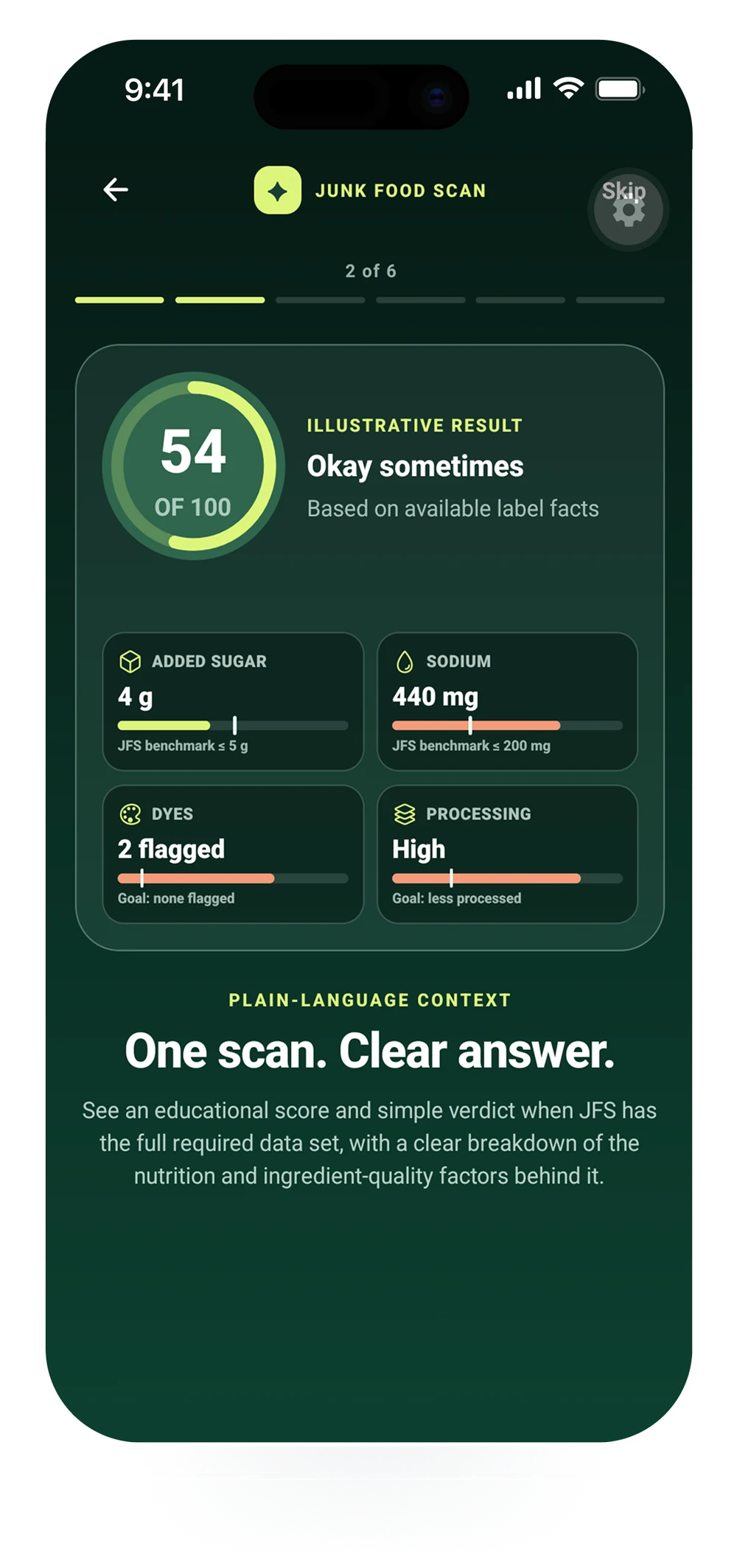
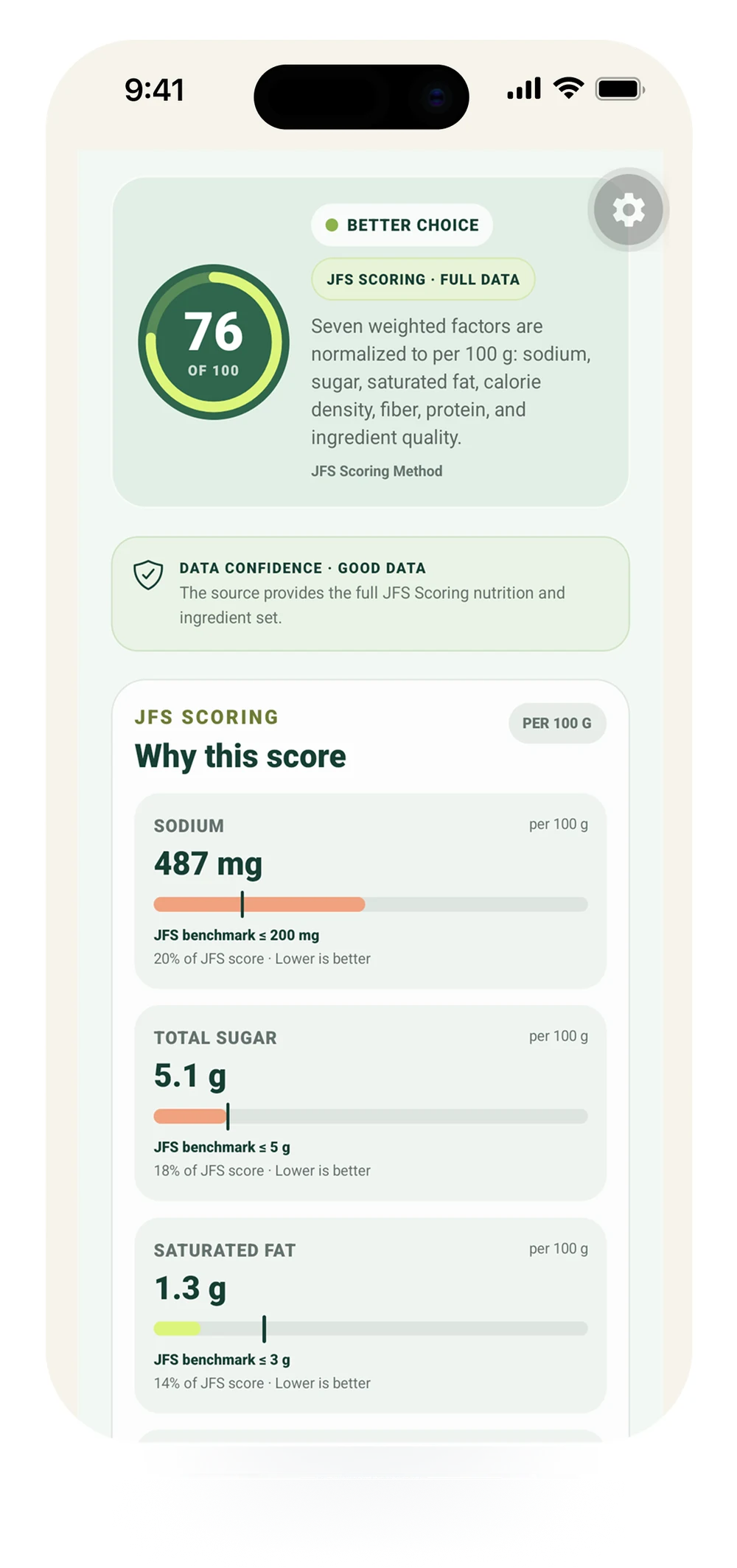
The number never stands alone.
JFS surfaces the available nutrition and ingredient signals behind a product rating. When source data is incomplete, outdated, or unavailable, JFS should make that limitation visible rather than pretending the score is more certain than the data allows.
Signals JFS can consider
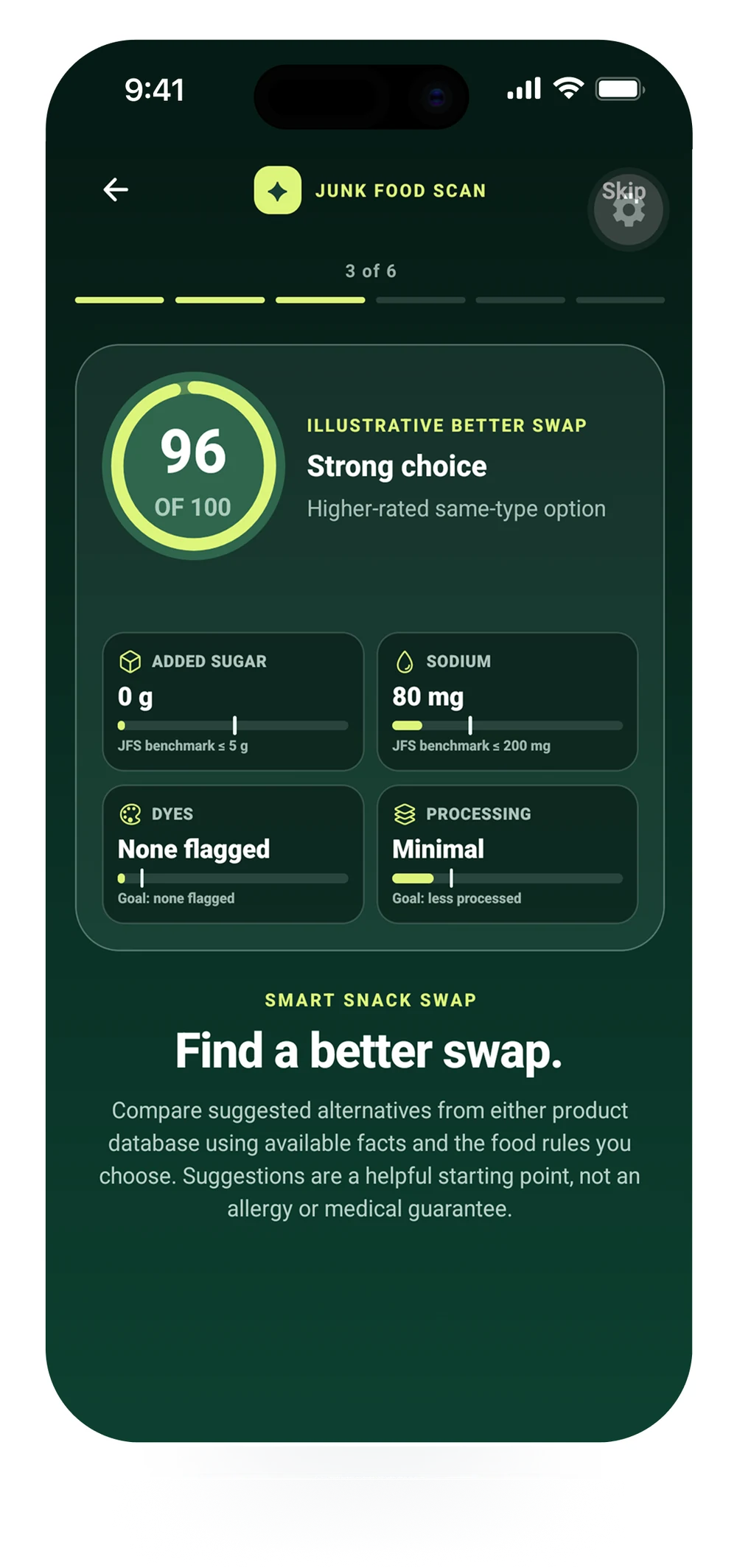
SodiumHigher amounts can reduce a product rating within the JFS scoring rules.
Added sugarAvailable added-sugar data can affect the score and is shown with the product details.
Saturated fatAvailable saturated-fat information can contribute to the overall rating.
Protein and other nutrientsPositive and negative nutrition signals are considered according to the JFS rules when reliable values are available.
IngredientsIngredient information may provide additional context when source text is available.
What the score does not mean
A JFS score is not a medical diagnosis, dietary prescription, allergen guarantee, or promise that a product is healthy, safe, suitable, available, or appropriate for you. Always verify the current package label.
Source transparency: product information may come from USDA FoodData Central and Open Food Facts. Source attribution is shown in JFS when available.